
Beyond PropTech: Real Estate Is Infrastructure
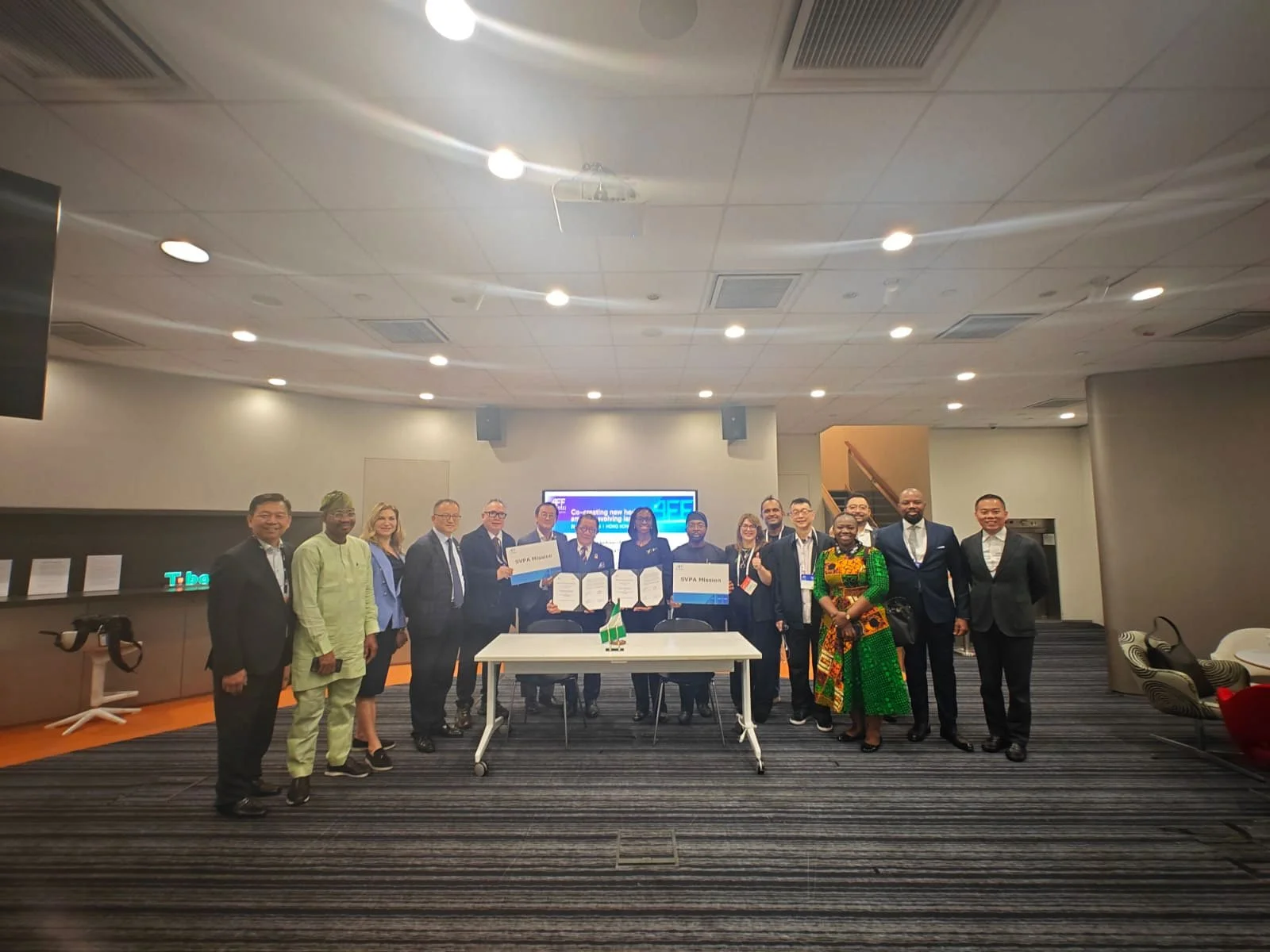
On economic diplomacy, a signing ceremony in Hong Kong, and what it reveals about where development partnerships are actually being built
THE ROOM
On the 27th of January 2026, at the Hong Kong Convention and Exhibition Centre, two institutions signed a Memorandum of Understanding. On one side: the Institution of Public Private Partnerships Hong Kong. On the other: the Lagos State Office of Public-Private Partnerships, Nigeria. The venue was the Asian Financial Forum — one of Asia’s most consequential gatherings of finance, investment and policy, co-organised by the Hong Kong Trade Development Council( HKTDC).
No ministerial motorcades needed. Two sets of signatures, a Nigerian flag on the table, open conversations, endless future opportunities.
TWO CITIES, ONE ARGUMENT
Lagos is Africa’s largest metropolitan economy — a city building itself at extraordinary speed, under extraordinary pressure, with infrastructure deficits that are simultaneously a governance challenge, a social reality, and one of the largest investment opportunities on the continent. The Lagos State Office of Public-Private Partnerships exists precisely at this intersection: mobilizing private capital to finance what public budgets alone cannot.
Hong Kong brings something different: a mature infrastructure finance culture, decades of PPP structuring experience, and an institutional memory of building a world-class city through disciplined public-private collaboration.
What these two cities share is an understanding that the infrastructure deficit facing rapidly urbanizing economies is not primarily a technical problem. It is a financing, governance and knowledge-transfer problem — and that is a problem both know something about.
THE REFRAME
The Silicon Valley PropTech Association began with a focus on real estate technology in the conventional sense. Over time, it has evolved into something harder to categorize and more useful: an economic development platform that treats real estate not as an asset class but as infrastructure. Housing is infrastructure. Land data systems are infrastructure. Digital property registries in informal settlements are infrastructure.
That reframing is not semantic. It changes who sits at the table, who funds the work, and what outcomes are considered success. It is also why a delegation spanning digital infrastructure, PPP, agriculture, real estate and housing — from Nigeria, Kazakhstan, Indonesia, Singapore and the US — makes sense as a coherent group. They are all, in different ways, building the same thing.
What an MOU does — when the right parties sign it, in the right context — is create a legitimate institutional relationship. It establishes a channel. It signals intent, publicly and formally, in a way that makes subsequent conversations easier, subsequent introductions warmer, and subsequent deals structurally more plausible.
Its value will be measured over the next years — in the knowledge-sharing it generates, the project structures it informs, and the capital it helps attract to Lagos’ infrastructure pipeline.
Economic diplomacy could arrive as a conversation at a conference, an international delegation , a room filled with the right people. The infrastructure of trust — which is what economic diplomacy builds is as slow and as structural as any bridge or data network.
Real estate is infrastructure. Infrastructure is development. And development, in the end, is a long conversation between people who have decided to take each other seriously across distance, difference and complexity.